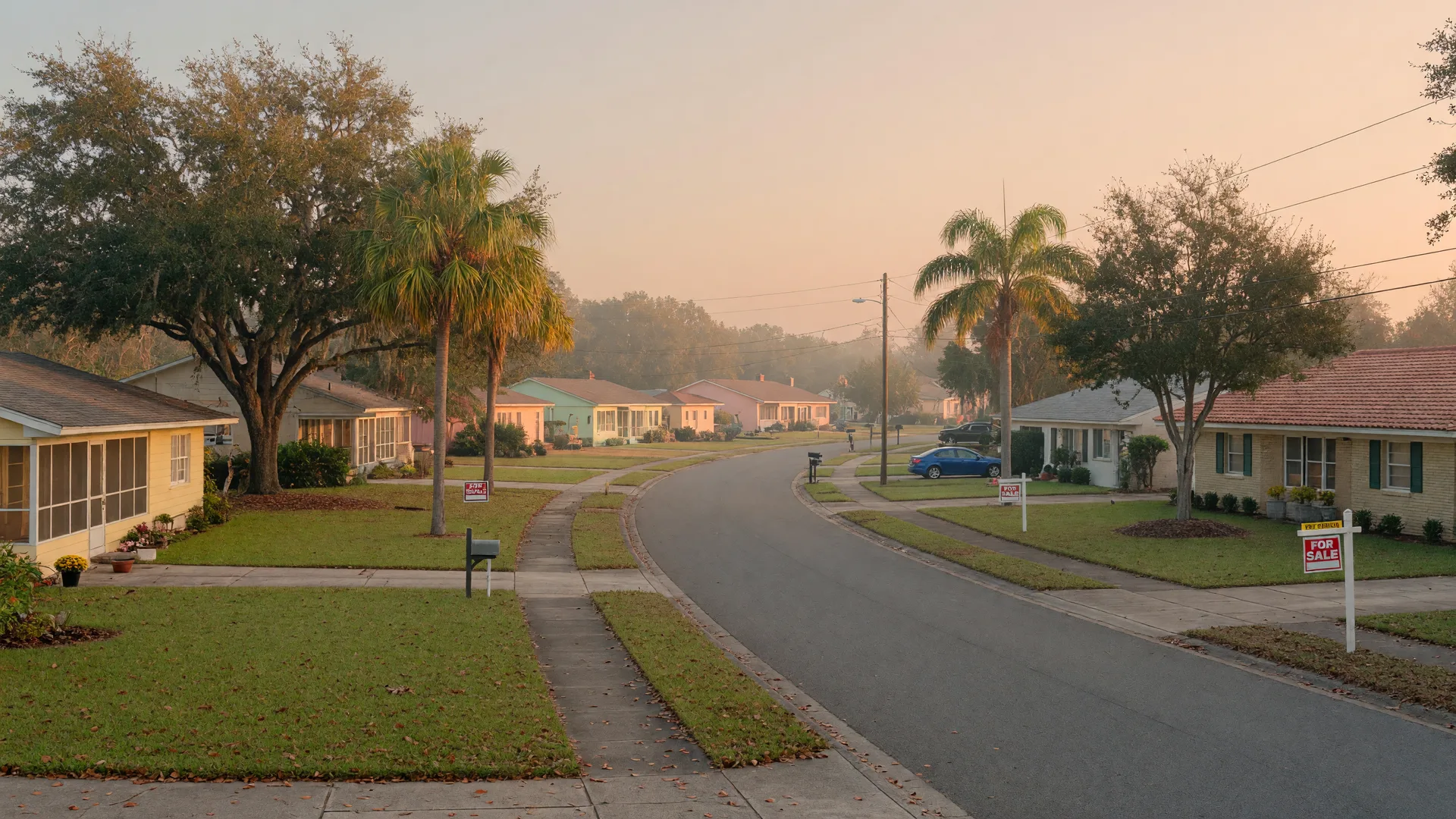
Every few years the question surfaces again: is the housing market about to crash? As of early September 2026, the latest available data for Northeast Florida says no. Prices are leveling off and inventory is growing, but this looks like a market finding balance, not one collapsing. Let me walk you through what the numbers actually show and why it matters, especially if you are under financial pressure.
What the Latest Numbers Show
For the Jacksonville metro, the median home price sat near $384,000 in July 2026, up about 1.3% year-over-year, with roughly a 3.9-month supply of inventory and median days on market around 37. August 2026 regional data from the Northeast Florida Association of Realtors (NEFAR) is expected in mid-September, so the most recent complete published figures are from June 2026: a six-county median of $420,000, up 7.9% year-over-year, with homes selling in a median of 31 days.
The county-level picture is softer, which is typical when a metro price averages in pricier coastal areas. Duval County's median ran near $327,000-$350,000 depending on the source, with higher inventory and longer days on market giving buyers more negotiating room than they have had in years. The takeaway is consistent across sources: values are holding and normalizing after a long run-up, not cratering.
Why It Is Not 2008 All Over Again
It is worth putting the current foreclosure headlines in perspective. Florida does lead the nation in foreclosure filing rate in 2026, and Jacksonville ranked in the top ten among worst-hit U.S. metros in the first half of the year. But the level of activity remains well below what we saw during the 2008-2016 crisis. What we are seeing now is the normal unwinding of pandemic-era protections, combined with high insurance costs and elevated mortgage rates. It is pressure, not a collapse. That is an important distinction, because it changes the range of options available to a homeowner who is struggling.
What This Means If You Are Facing Distress
If you have fallen behind on payments, been served a lis pendens notice, or inherited a property you cannot afford, a stabilizing market is actually helpful news. When values hold, a short sale or a traditional sale can often pay off more of the mortgage than in a falling market, which can reduce or eliminate the deficiency a lender might pursue. Acting early matters: the more equity you protect and the more options you keep open, the better your outcome is likely to be.
Your options can include a loan modification, a short sale, a deed-in-lieu of foreclosure, a refinance, or a well-timed traditional sale. With over 30 years in REO and distressed sales and a licensed mortgage background, I have seen all of these paths work, and I can help you figure out which one fits your situation. There is no charge and no pressure for a first conversation.
Not Sure What Your Options Are?
Free consultation. No pressure. No obligation. Just honest advice about your situation.

Over 40 years in real estate, over 30 years exclusively in REO and distressed sales. Licensed Broker, Mortgage Broker (NMLS#1851106), and Title Agent (A259313) in Florida. I have worked with FHA, VA, Fannie Mae, Freddie Mac, Chase, CitiBank, Goldman Sachs, and more. I know how lenders, servicers, and government agencies operate from the inside.